Estate & Legacy Giving

Remembering the Choroideremia Research Foundation (CRF) in your estate plans or through planned gifts is a powerful way to strengthen research efforts and bring us closer to treatments and a cure. Your generosity can help ensure that future generations will never experience vision loss caused by CHM.
The following are common ways you can leave a legacy of hope. Please note: this information is provided for educational purposes and should not be considered financial or legal advice. We encourage you to consult with your personal financial advisor or attorney when considering any planned gift.
Bequests
A bequest is a gift you make through your estate or will. It can be a transfer of cash, securities, or other property directed to CRF. Bequests are flexible—you can designate:
A specific dollar amount,
A percentage of your estate, or
The remainder of your estate after other gifts are distributed.
To set up a bequest, you will need to update your will or living trust, or add an amendment (codicil) to your existing plan.
Life Insurance
You may designate CRF as a beneficiary of an existing or new life insurance policy. This means that upon your passing, the proceeds will directly support CRF’s mission. To set this up, contact your life insurance company for the appropriate beneficiary designation form.
Qualified Charitable Contributions (QCD)
Qualified Charitable Distribution (QCD), is a way for individuals aged 70 ½ and older to donate money from their Individual Retirement Account (IRA) to a qualified charity, such as the Choroideremia Research Foundation (CRF). This method allows you to meet your Required Minimum Distribution (RMD) without paying income tax on the distribution and is particularly beneficial in light of recent tax code changes that have made it harder for many people to claim charitable deductions. To make a QCD, you must make a complete charitable gift, and the charity must provide a contemporaneous written acknowledgment stating that no goods or services were received in return.
How to make a Qualified Charitable Distribution (QCD)
- Eligibility: You must be age 70 ½ or older at the time of the distribution.
- Source: The donation must come directly from an IRA (traditional, SIMPLE, or SEP).
- Amount: You can contribute up to $100,000 per year (or $200,000 for a married couple, with each spouse taking from their own IRA).
- No Benefits: The gift must be a complete gift. You cannot receive any goods or services in exchange for the donation, such as tickets to a gala or a dinner.
- Documentation: You must receive a written acknowledgment from the charity stating that no goods or services were provided.
Tax Benefits and Implications
- Tax-Free Distribution: A QCD is not considered taxable income, which can lower your Adjusted Gross Income (AGI).
- Meets RMD: The distribution can be used to satisfy your annual Required Minimum Distribution.
- No Itemization Needed: You do not need to be an itemizing taxpayer to use a QCD.
- Reporting on Taxes: The full distribution amount will be reported on your Form 1099-R. On your Form 1040, enter the full amount in box 4a and the taxable amount (which is zero for a QCD) in box 4b, and write “QCD” next to box 4b.
For more information about making a bequest, designating CRF as a life insurance or retirement plan beneficiary or making an IRA contribution, please contact: Kathi Wagner, Executive Director at kathiwagner@curechm.org
Voices of Our Community
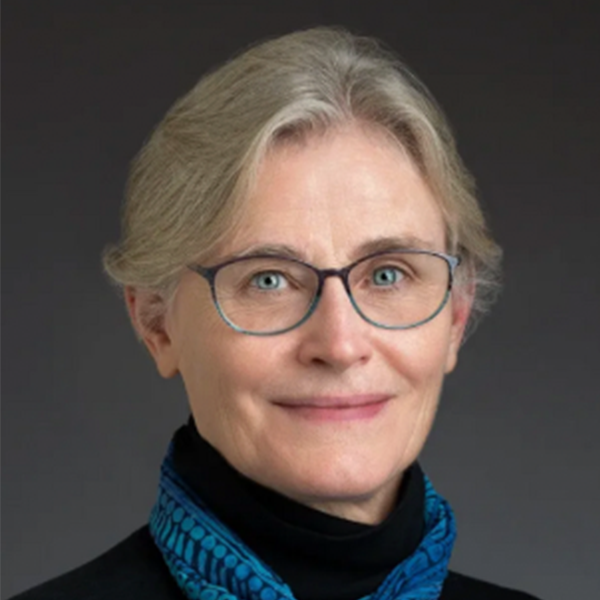
Mary Porter, JD
CHM Carrier & CRF Officer At-Large
“What would I say to someone considering supporting the CRF? It’s money well spent. We are very efficient—I believe in how the money is used. Most of our work is done by volunteers with amazing skills, many of whom are CHMers. The funds we receive go toward helping people manage vision impairment and blindness, as well as supporting scientific and medical research and clinical work most likely to benefit families affected by choroideremia.”
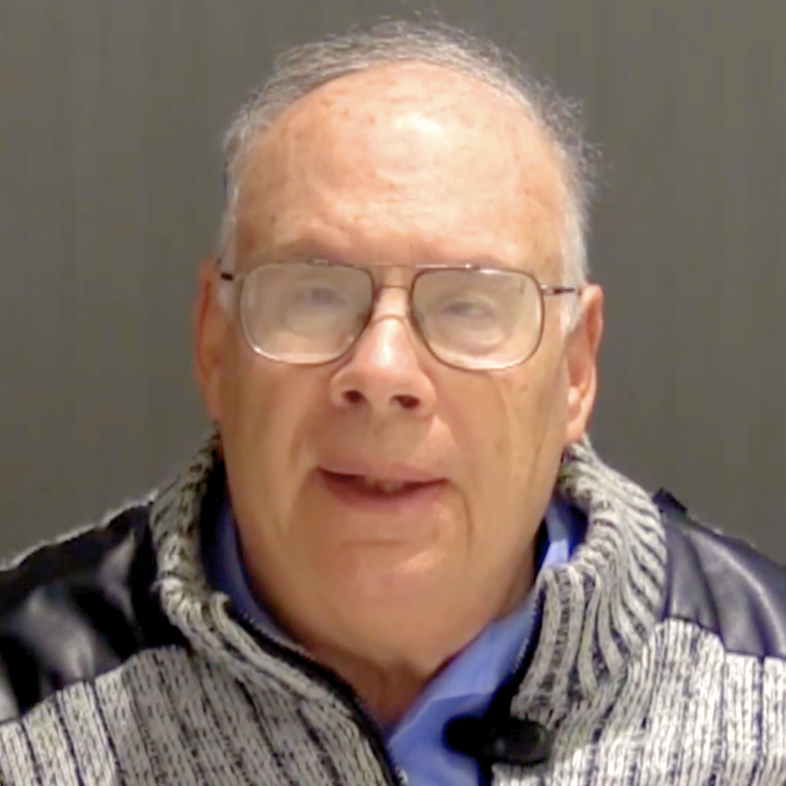
Marty Reiss
CHMer
“The CRF has made a big difference in my life for many reasons. I’ve been involved since the beginning. It’s been quite a few years, but it’s meant so much to me—first and foremost, the research. It may help people like me regain some vision or slow the decline for younger folks, which is huge. Now, there’s light at the end of the tunnel. You couldn’t say that years ago, so that’s a big deal. The other thing is all the wonderful people I’ve met through the CRF who share similar stories—and now, we’re friends.”
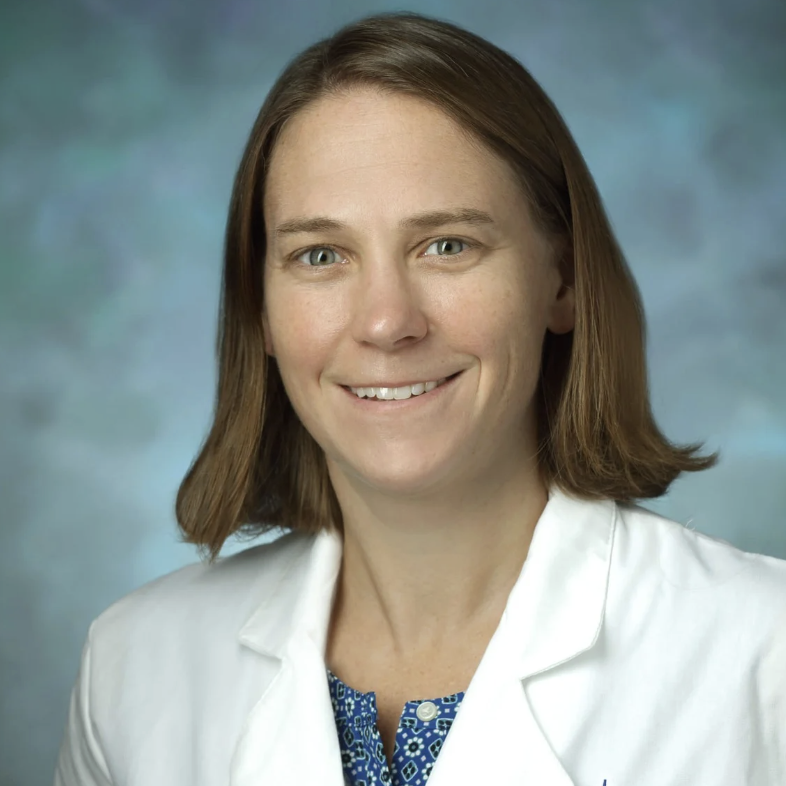
Malia Edwards, PhD
CRF Science Advisory Board Member
“Working with the CRF has been incredibly inspiring for me. I attended my first meeting a few years ago, after having worked with the foundation for some time before that. Interacting with the patients and the entire CRF community—the fact that it’s so family-based, driven by patients and their families—has been a constant reminder of why we do what we do. Basic science isn’t easy, but we do it because we’re passionate about it. For me, seeing how appreciative patients are and witnessing their day-to-day experiences truly motivates me to go back to the lab and keep working.”

CRF is registered as a US 501(c)3 nonprofit organization EIN: 04-3511754
Our mission is to raise funds in support of scientific research leading to a treatment or cure of choroideremia, a hereditary retinal-degenerative disease that causes blindness; to educate people affected by the disease; and to inform the public.


©Copyright 2025 The Choroideremia Research Foundation Inc. All Rights Reserved.